

Cash stays trapped in the bin
The purchase price, the repair you already paid, and the freight inward do not disappear because the unit is now “stock.” That money cannot buy the next shortage part while it waits for a perfect price.
There is no universal holding-cost percentage that fits every shop. Your own rent, insurance, cost of money, and the time your people spend recounting the same shelf are the numbers that matter.
Time changes the article
Shelf life, storage conditions, corrosion, elastomer ageing, and lost trace packs are not theoretical. A unit that was easy to sell on removal can become a project after two quiet years.
Recertification or a new inspection, where your system requires one, is a real cost. Sometimes it restores the sale. Sometimes it proves the unit should have moved earlier at a lower price.

Slow stock hides operational cost
Every cycle count, every customer question, and every time someone pulls the wrong unit because the shelf is crowded is a cost of keeping material you are not proud to offer. Those hours rarely appear on the part tag.
Slow stock also trains the team to distrust the inventory system. Once people assume the computer is wrong, they stop updating it, and available units become invisible too.
Decide on a cadence
Review ageing stock on a schedule you will actually keep. For each unit, choose sell, repair, tear down, or scrap, and name the owner. “Watch it” is only a decision if it has a date.
A lower asking price with an honest file is often the rational sale. The comparison is not today’s price against the price you hoped for. It is today’s price against another year of holding the same problem.
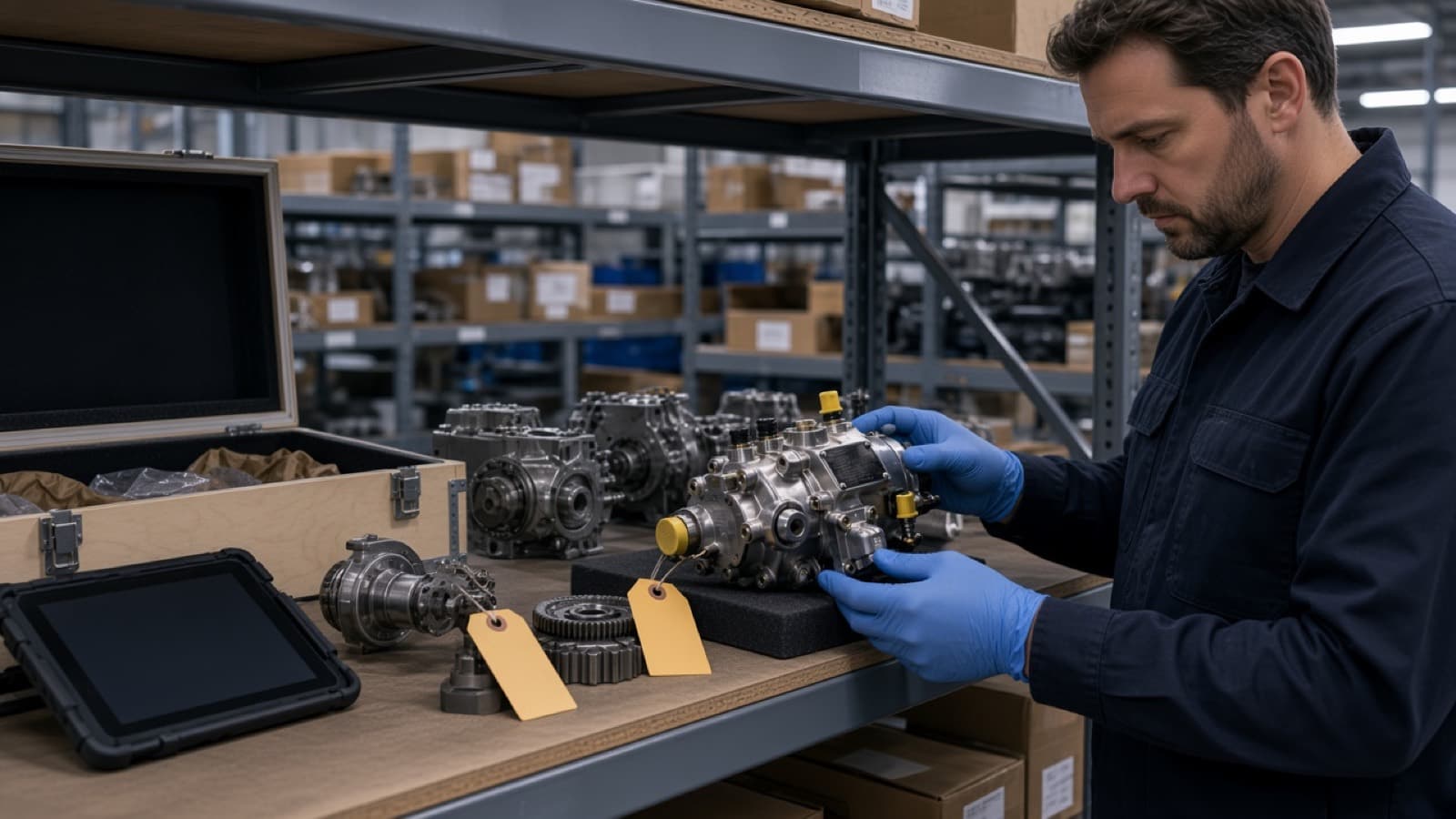
Count the costs that never reach the part tag
Rent, insurance, the cost of money, recounts, and the hours spent answering questions about a unit you are not proud to offer are all holding costs. There is no universal percentage that fits every shop. Use your own numbers, even if they are rough, and put them next to the asking price.
Time also changes the article. Shelf life, corrosion, aged elastomers, and a trace pack that can no longer be found turn a once-easy sale into a project. Recertification, where your system requires it, is a real invoice. Sometimes it restores the sale. Sometimes it proves you should have moved the unit earlier.
Slow stock trains people to distrust the inventory system. Once the team assumes the computer is wrong, they stop updating it, and the units you could still sell become invisible too.
Give ageing stock a decision date
Review it on a cadence you will keep. For each unit, choose sell, repair, tear down, or scrap, and name the owner. 'Watch it' is only a decision if it has a date and a person.
Compare today's honest price with another year of holding the same problem. The comparison is not against the price you hoped for when the unit was removed. Hope is not a carrying-cost calculation.
If you list the unit, describe the age of the stock and the document status plainly. A buyer can say yes to a slow unit with a clear file. A buyer who discovers the gap after paying will not fund the next one.
List with a record
Bring stock to buyers who ask for the file, not only the price
Apply as a seller, complete the review TabAir requests, and describe condition and documents in a way a buyer can evaluate.
This article is general marketplace guidance from TabAir. It is not technical, airworthiness, legal, tax, export-control, or financial advice. Buyers, sellers, and agents remain responsible for their own technical acceptance, licences, and commercial decisions.