
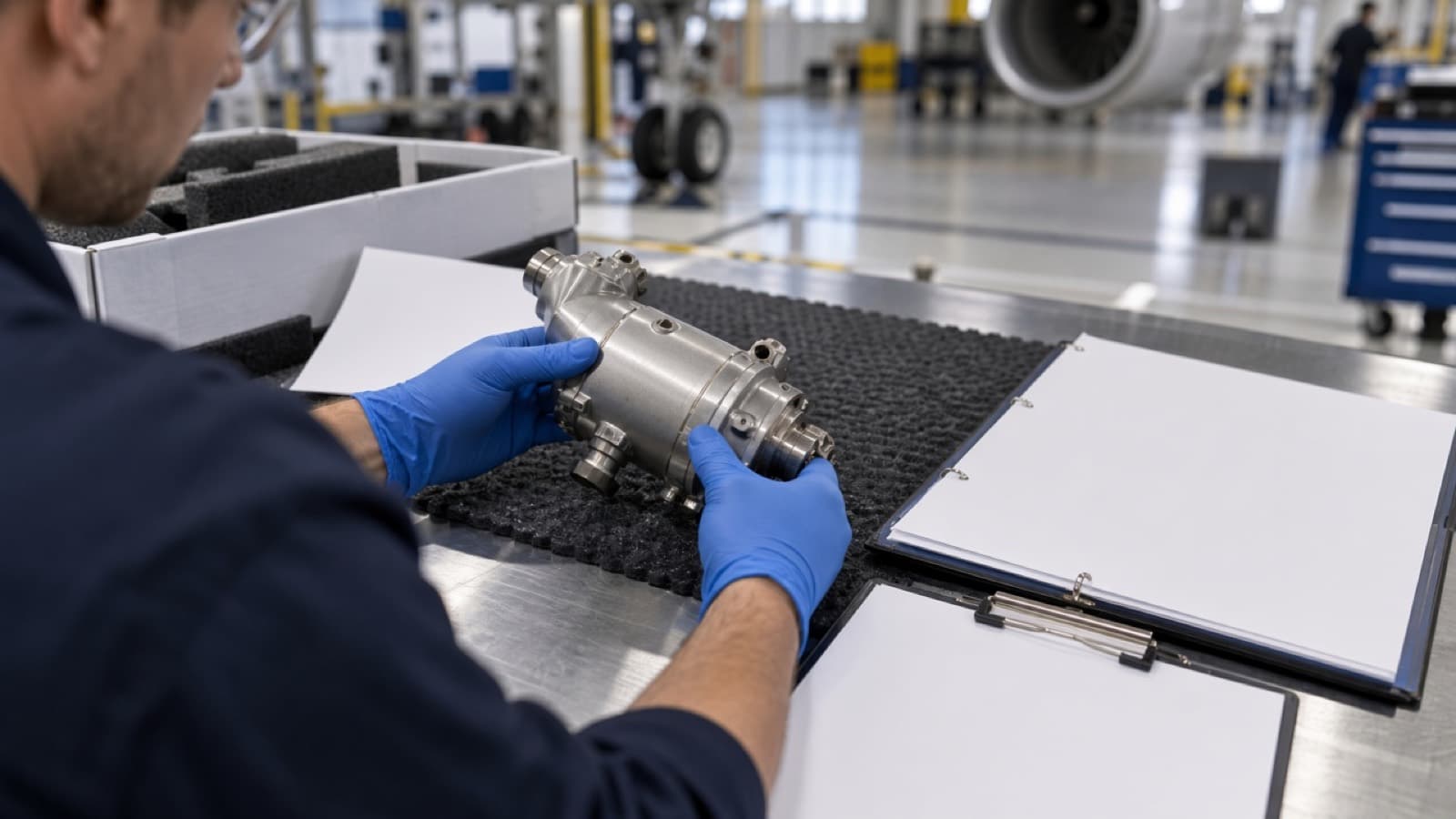
Continuing airworthiness is the ongoing duty
Type certification is the start of an aircraft’s approved life. Continuing airworthiness is the work of keeping it in a compliant condition afterwards: maintenance programmes, records, airworthiness directives, and the status of the parts installed.
In the European system, a continuing airworthiness management organisation can be approved to carry out that management for an owner or operator. Other systems use different names and different approvals for similar duties. Do not assume the acronym travels unchanged.
Why the acronym appears on a parts request
The people managing continuing airworthiness are often the ones who will reject a unit with a broken history, even when a purchaser is ready to pay. Their question is whether the article can be recorded as installed under the programme they manage.
A seller who understands that will send status, release, and life information early. A seller who treats it as bureaucracy will meet the rejection later, after the freight has been booked.

Sellers are not being asked to become the CAMO
You are being asked to describe your article truthfully and to provide the records you hold. You are not being asked to approve the installation or to sign the aircraft’s airworthiness record.
If you do not hold a document, say so. Inventing a continuing-airworthiness statement because the buyer used the word CAMO is a misrepresentation.
TabAir does not perform this role
TabAir is not a CAMO, not an operator, and not the organisation that decides whether an article may be fitted. The platform can carry the request and the files to the parties.
If your customer needs a continuing-airworthiness decision, that decision stays with the approved organisation and the people authorised under their system.

Why the request sounds bureaucratic
People managing continuing airworthiness are often the ones who reject a unit with a broken history, even when a purchaser is ready to pay. Their question is whether the article can be recorded as installed under the programme they manage. A seller who understands that will send status, release, and life information early.
In the European system, a continuing airworthiness management organisation can be approved to do that management for an owner or operator. Other systems use different names for similar duties. Do not assume the acronym travels unchanged. If your customer used the word, ask which system they mean rather than inventing a statement to match it.
You are being asked to describe your article truthfully and to provide the records you hold. You are not being asked to approve the installation or to sign the aircraft's airworthiness record. If you do not hold a document, say so.
TabAir does not perform this role
TabAir is not a CAMO, not an operator, and not the organisation that decides whether an article may be fitted. The platform can carry the request and the files to the parties. The decision stays with the approved organisation and the people authorised under their system.
A listing that says 'CAMO friendly' without the actual records is advertising, not evidence. Send the records, or send a clear list of what is missing.
Buyers should put the continuing-airworthiness questions in the requirement: life status, release, and any lease condition they already know. Sellers cannot guess the programme from a part number.
Start a requirement
Put the part, the records, and the timeline in one request
Describe the article, condition, documentation, and delivery need through TabAir. A structured request is easier to compare than a chain of informal calls.
This article is general marketplace guidance from TabAir. It is not technical, airworthiness, legal, tax, export-control, or financial advice. Buyers, sellers, and agents remain responsible for their own technical acceptance, licences, and commercial decisions.